Contact Form

Name

Email *

Message *

Search This Blog

Sunday, 4 October 2026

can I honestly use AI tools to describe how bad AI is at creating meaningful tech diagrams


I mean, what a mess 

It looks techie

I uploaded the screenshots and photos into Meta AI 

Gave a basic description 

And Meta AI did the rest

No substitute for a human graphic editor  


Short description given to AI

Channels 1 & 2 behringer 
Channels 3&4 m-audio 
XLR on Behringer 2: Condenser mic 
1/4 jack on Behringer 1: keyboard audio input 
XLR on M-Audio 1: dynamic instrument mic 
1/4 Jack on M-Audio drum machine 
MIDI from keyboard to MIDI in on M-Audio


graphic output 


Suffice it to say, garbage in, garbage out


Saturday, 3 October 2026

Archie Tulk


ARCHIE TULK
Captures The Buzz Of A Love You Can't Shake On Single
'White Bee' Ahead Of Debut Album 'Human Noise'


Single and Music Video Out Friday, October 2 | Album 'Human Noise' Out November 27


Stream 'White Bee'
Watch 'White Bee' Music Video
Download Press Images / mp3 / wav


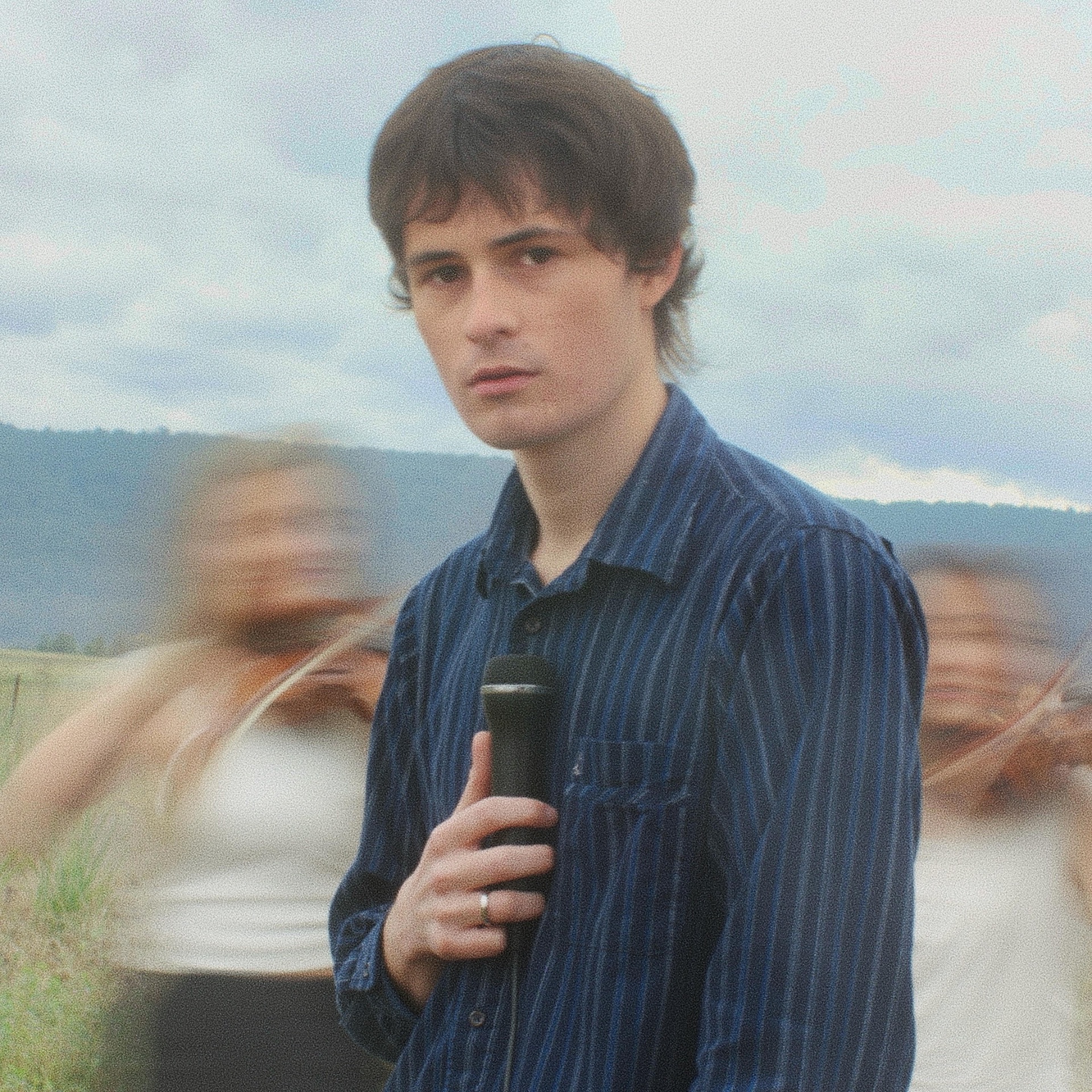
Sometimes longing can feel like a buzz that you just can’t seem to escape. Eora/Sydney-based artist and composer Archie Tulk captures that feeling on his intimate new single ‘White Bee’, out October 2 alongside an accompanying music video. The single also comes with the announcement of his debut album ‘Human Noise’, arriving November 27.


With his background in composition, Tulk brings an adventurous, genre-fluid approach to songwriting, blurring the boundaries between art-pop, jazz and orchestral music through intricate arrangements and a pop sensibility.


As a composer, his works have been commissioned and performed by Dutch National Opera & Ballet, Residentie Orkest, Luminescence Chamber Singers, Roctet, Sydney Children’s Choir and Muze van Zuid Festival.


His recent international performances include intimate events at The Grey Space in the Middle, Paardcafé and Roode Bioscoop in the Netherlands, while releases ‘August Blue’ and ‘Watercolours’ received support across Australian community radio, including FBi Radio and a feature in RTRFM’s Songs of the Week.


On ‘White Bee’, Tulk folds jazz, art pop and sweeping orchestral arrangements into an intimate alternative song. Piano and drums move through clipped, stop-start patterns, creating a playful groove and rhythmic pulse beneath his velvety baritone vocals. Around them, strings blend with winds and harp to create a lush, enveloping backdrop while retaining an immediate, intimate warmth.


At its core, ‘White Bee’ explores the yearning that comes with long-distance relationships and the strange persistence of someone remaining present in your thoughts despite the physical distance between you. Buzzing sounds threaded throughout the arrangement embody this constant rumination, becoming a recurring motif for thoughts that refuse to disappear. As Tulk shares:


“‘White Bee’ explores the buzz of a lover you can’t get out of your head, and the yearning that comes with long-distance dating. The song unfolds through a vibrantly orchestrated sound world, featuring instruments including violins and saxophone.”


The accompanying music video, directed by Guian Balan and shot and edited by Dylan Burrows, follows Tulk and his violinists and saxophonist through a series of contrasting settings. Moving between the openness of a sprawling field and the intimacy of a dimly lit jazz bar, the performance-led clip mirrors the track’s movement between expansiveness and closeness, bringing the colourful world of ‘White Bee’ to life on screen.


‘White Bee’ and its accompanying music video are out October 2, with his debut album ‘Human Noise’ arriving November 27.


Follow Archie Tulk
http://www.archietulk.com
Spotify | Apple Music | Facebook | Instagram | Youtube


DNS — Musical Artizan — Am 432Hz • 60 BPM • Logic Pro + iMovie


This is how I record my Native American flutes now. Simple, from the heart, and in sync.
The Gear I Use:

Yamaha keyboard as controller, Logic Pro on Mac, a good condenser mic for flute, headphones, my growing collection of flutes (12+ now), frame drum/djembe, steel tongue drum, guitalele, and my phone for optional video. All tuned to A = 432Hz — the natural frequency.

STEP 1: Set the drum to keep a pulse

I start with rhythm, not melody. Traditional was only ever flute, rattle and drum. So I set a djembe or frame drum pattern in Logic — Pop Rock Drummer or just a simple hand drum loop — at 60 BPM.
60 BPM is one beat per second — heartbeat tempo. It keeps everything steady and peaceful. No rush. This pulse is the earth, the foundation.

STEP 2: Set the countdown intro

In Logic Pro, I turn on the 4-beat countdown — 1 • 2 • 3 • 4.
I need those 4 clicks before I play. It lets my breath settle, and my heart get in time with the drum. I hit record, hear the count, and then I am ready.

STEP 3: Improvise from the heart

This is the important one. I do not read music for this. I pray, breathe, and play what is in my heart.
I play in Am (A minor) — my favourite for Native flute — at 432Hz. I have my headphones on so I can hear the drum pulse, but the melody is pure improvisation. No second takes to make it perfect — the first breath is often the most honest. This is making melody to the Lord — Ephesians 5:19.

STEP 4: Add drones and other backing

After the flute is down, I build the nest around it.

I add: Keyboard Player - Broken Chords — soft pad drone
Romance Strings — long, slow strings that answer the flute
Steel tongue drum or guitalele — for sparkle on top
I keep it simple. The flute is the voice; everything else is just the air it floats on.

STEP 5: Optionally record a video too (iMovie)

Sometimes I film myself at the same time on my phone (vertical for YouTube Shorts).
I import the phone video into Apple iMovie — I make a simple movie, no fancy editing. Just trim the start and end, add a title like "Am 432Hz Native Flute - 60 BPM" and I keep the original phone audio as a guide.

STEP 6: Sync it up — Metronome + Finger Click Trick

This is how I line up Logic audio with iMovie video:Same metronome in ear and in Logic. I put a 60 BPM metronome in my earbuds (same as Logic's 60 BPM) so my body stays on the same pulse even if I am filming.

Click your fingers to mark the beginning and end. Before I start playing, and after I finish, I do a loud finger click/clap right in front of the camera/mic.

That click makes a sharp spike in the waveform — you can see it clearly in Logic and in iMovie.
I line up the two spike waveforms — one from Logic, one from iMovie — and they are perfectly in sync. Just like a Hollywood clapperboard, but with my fingers.

Then I mute the phone audio and use the beautiful Logic Pro audio over the video. Export from iMovie, and it is ready for YouTube and the blogs.

Final thought: Drum is pulse, countdown is preparation, heart is source, backing is atmosphere, video is witness, finger-click is anchor. Keep it simple. Keep it worship.


DNS copyright © 2026 — David Nicholas Slater — Musical Artizan & Kingdom Poetry

Thank you world


GUITAR TRIO for Piano, Two Acoustic Guitars & Electric Bass - with TABDavid Nicholas Slater — Copyright © 2025 — Musical Artizan


This is my modern groove trio — not exotic scales like Enigma or Rome's Paradise, but a tight, interlocking band where every instrument has a different job. You can see it clearly in bars 1-12 of the score at ♩=100.

How the parts work:


1. One Guitar Uses Arpeggios:
Acoustic Guitar 1 (top guitar staff) is the arpeggio guitar. Look at bars 1-4 on your score — it has single notes with TAB underneath: 0-2-0-2, 3-2-4-2, with the little p and h markings. It never plays full chords. It plays broken chord figures — E minor, A minor shapes arpeggiated — constantly moving in eighth notes. This is the sparkle, the high movement. In the score viewer it is the line that has the flowing slurs over single notes.

2. The Other Uses Chords:

Acoustic Guitar 2 (second guitar staff) is the chord guitar. Bars 1-4 show it holding full chords — you see the stacked notes on the notation, and the TAB underneath shows 0-2-0-2-3-0 shapes, three or four strings at once. While Guitar 1 is arpeggiating, Guitar 2 is strumming and holding chords on beats 1 and 3. It is the rhythmic harmony — chunky, wooden, acoustic. One guitar moves, the other anchors. When Guitar 1 goes up, Guitar 2 holds. That duet between arpeggios and chords is the core sound of the trio.


3. The Bass Has Single Notes:
Electric Bass (bottom staff) is single notes only. Your score shows it at the bottom — tab with 3-3-3-3, 2-2-2-4 — just one note at a time, no chords. Bars 1-4 it plays half notes — D, A, E, G — root notes holding the band together. Then, in bars 5-8 it starts walking in quarter notes, and in bars 9-12 it breaks into eighth-note runs (your bouncy bass line: E, F#, G, A, B). It never plays chords — always clean single-note bass.

4. The Piano Bass Line Has Chords, Whilst The Treble Is Also Arpeggios:

Piano is doing the opposite job to the guitars, which is why it fits.

Treble (right hand) — Piano treble is also arpeggios. Look at the top staff, bars 1-12 — constant eighth notes: C, D, E, G, A, B, all slurred, flowing, just like Acoustic Guitar 1 but an octave higher and with two hands. It doubles and answers the arpeggio guitar.

Bass (left hand) — Piano bass line has chords. Bottom piano staff bars 1-12 — you see stacked notes — left hand playing three-note chords, not single bass notes. While the Electric Bass is playing single notes, the piano left hand is playing full chords underneath — Eb major, G major, D major shapes — giving the harmony that the electric bass doesn't. So the low end has both: Electric Bass single notes + Piano bass chords together.

The Full Machine: Top layer: Piano treble arpeggios + Guitar 1 arpeggios — two interlocking arpeggios, one piano bright, one guitar warm

Middle layer: Guitar 2 chords — acoustic strum holding the groove
Bottom layer: Piano left-hand chords + Electric Bass single notes — piano provides harmonic pad, bass provides punch and walk

Bars 1-4: All together — piano arpeggios flowing, guitar 1 arpeggio answer, guitar 2 chords, electric bass half notes.

Bars 5-8: Electric bass switches to quarter-note walk, piano left hand chords get shorter, guitars keep their roles.

Bars 9-12: Electric bass takes over with eighth-note runs while piano treble continues arpeggios over top and guitar 2 keeps chopping chords.
No straightforward exotic scales here — this one is groove and clarity; each instrument knows its job: arpeggios, chords, single notes.

Instrumentation: Piano, Acoustic Guitar (arpeggios) with TAB, Acoustic Guitar (chords) with TAB, Electric Bass with TAB
Tempo: ♩=100


Copyright © 2025 by David Nicholas Slater

ROME'S PARADISE for Woodwind Trio - Flute, Oboe, Bassoon David Nicholas Slater - Copyright © 2025 Musical Artizan


This is a piece with no straightforward keys. Like all my recent works, it lives in exotic scales - sharps and flats everywhere; no one in the same key at the same time. But the structure of Rome's Paradise is very clear, and very classical in its own way: duets leading to trio, then a new texture, then a final drive.


How it is built:

1. Opening - Duets moving into full trio with section repeat (Bars 1-13)
The piece does not start with all three. It starts as a conversation between two.
Bars 1-4: Flute and Oboe in duet. You see it on the first page of the score. Flute has a lyrical line - D, B, A, G# - with those exotic chromatic neighbours, while Oboe answers underneath with Eb, D, Db, C - a flattened, darker version of the same idea. Bassoon is not part of the duet yet. Bassoon holds a long, low pedal - a whole note D, then a whole note E, then a whole note Bb - like the foundation of a garden wall. The two high voices dance over the top, not in the same key, creating that bittersweet paradise feeling.

Bar 5-7: The duet becomes a full trio. Flute, Oboe and Bassoon all play together for the first time. Flute takes the lead with sixteenth-note flourishes, Oboe takes a quicker answering flourish, Bassoon still anchors with long notes but now moving in half notes. You hear all three exotic scales at once.

Bars 8-13: Flute solo with Bassoon answering, then section repeat. Bars 8-9 show Flute alone with fast chromatic runs - exotic scale with sharps - while Oboe rests and Bassoon plays a fast descending run in quarter notes with # and b. This is the solo duet texture again - one solo on top, one low answering. Then Bars 14-21 are a literal section repeat of the opening idea, but varied. You see the double bar line at bar 21 in your score. That repeat is important - it is like entering the garden gate twice, the second time knowing where the paths go. Flute holds long, Oboe plays a short duet figure with exotic Bb and G#, Bassoon holds long low notes. It closes the first garden.

2. Middle Section - Half notes on Bassoon with duets of Flute and Oboe on top (Bars 22-26)
This is the heart of the paradise. Look at bars 22-26 on the second system of page 2.
Bassoon moves to half notes. Instead of whole-note pedals, Bassoon now plays slow half notes - D, E, F, G- with long slurs, very legato, like a slow procession through cypress trees. These half notes are the heartbeat, steady, grounded, always with b or # - no plain diatonic notes.

Flute and Oboe in duet on top. Over those half notes, Flute and Oboe return to duet texture, but now higher and more intertwined. Flute plays eighth-note figures - A, B, C#, D# - exotic, rising, while Oboe weaves underneath with its own version in quarter notes, with ties and slurs. They are not playing the same rhythm - one in quarters, one in eighths - just like your Enigma Machine technique, but here it is gentle, not discordant. It is two birds over a slow river. The exotic scales make it shimmer - Flute may have G# while Oboe has Gb at the same moment, a beautiful clash.

3. Final Section - Bassoon plays quarter notes with Flute and Oboe soloing on top (Bars 27-31)
Page 3 shows the change clearly.

Bassoon switches to quarter notes. Now the low voice drives. Bars 27-31: Bassoon has continuous quarter notes - D, E, F, E, D, C#, B, Bb - each note slurred, walking, with flats creeping in. The half-note procession is over; now we are moving forward, leaving paradise, but still inside it.

Flute and Oboe soloing on top. Over that walking bassoon, Flute takes a true solo - bar 27 shows Flute alone with A, G#, A, B, with a slur, then rests, then a high B and natural flourish at bar 29 with G# G# markings from your score - fast, exotic, bird-like. Oboe then takes over as soloist - bar 30 shows Oboe alone with a descending figure A, G#, E, D#, with a slur, while Flute rests. They are no longer duetting constantly; they are soloing, one at a time, on top of the bassoon quarter notes. Flute solo, then oboe solo, then flute again. The texture is thinner, clearer, more virtuosic.

The piece ends with the bassoon tying over its quarter notes into a final long note - bar 31 - while Flute and Oboe hold silence. The garden is left with just the low voice, fading.

Why Exotic Scales:

Like I said, I use them all the time; no straightforward keys for me. In Rome's Paradise, Flute may be in a scale with E major sharps on paper but playing F natural and Bb; Oboe may be in Eb with flats but playing G# and C#; Bassoon may be playing a whole-tone fragment. That is paradise - not a plain C major garden, but a garden where every flower is a different colour, every scale a different scent.
Instrumentation: Flute, Oboe, Bassoon

Form: Duets -> Full Trio with repeat -> Bassoon half notes + Flute/Oboe duets -> Bassoon quarter notes + Flute/Oboe solos


Copyright © 2025 by David Nicholas Slater

THE ENIGMA MACHINE for String Trio David Nicholas Slater Using Giuseppe Verdi's Scala Enigmatica


The Scale:

Giuseppe Verdi published his enigmatic scale in 1888 — C, Db, E, F#, G#, A#, B, C. 1 - b2 - 3 - #4 - #5 - #6 - 7. It is not meant to be comfortable. Between C and Db is a grinding half-step, an immediate dissonance. Between Db and E is an augmented second, a leap that sounds exotic, almost Middle-Eastern. Then F# to G# is whole tone, then G# to A# whole tone, then A# to B a half-step that pulls painfully into the tonic. The whole scale is a code. It contains both extreme chromatic tension and strange, floating whole-tone beauty. That is why it is called enigmatic — it never settles. This is the DNA of this trio.

You can see it on page one of the score — the key signature is four sharps, E major / C# minor on paper, but the music inside is not E major at all. It is Verdi's scale transposed. Every player sees sharps and double-sharps where they do not expect them. That visual shock is intentional. The players must decode as they play, like operators of the original Enigma machine.

The Machine:

The title is literal. The Enigma Machine worked with rotors. One rotor turns slowly, another turns fast. A letter pressed on the keyboard could become any other letter depending on where the rotors were. This piece works the same way.

The String Trio is the machine: Violin, Viola, and Violoncello are the three rotors.

Fast Sections Juxtaposed With Long Slow Sections:

The form is built on extreme juxtaposition. You will hear it from the opening bars.
The piece opens with long, held notes — Violin with a whole-note B in the enigmatic key, Viola with a whole-note, Cello with a low drone, tempo ♩=100 but feeling like Adagio because of the note lengths. This is the machine at rest, humming.

Then, without warning, as in bar 13 of your score, the Violoncello erupts into a fast flourish — thirty-second notes, a rapid upward run of the enigmatic scale — while Violin and Viola remain on long held notes. The slow rotor holds, the fast rotor spins.

That is the core technique of the whole work: whilst one instrument uses long notes, another uses 1/4 notes or 1/8 notes.

Examples from the score you sent: Bars 1-6: Violin holds long, tied notes; Viola answers with shorter quarter-note fragments containing G# and A# chromatic neighbours; Cello holds pedal. Slow vs. slow-moving.

Bars 7-12: Inversion. Viola takes the fast material — eighth-note chromatic steps with sharps (G#, A#) — while Violin holds a single long pitch, and Cello takes over with a sustained low open-string drone. You hear the discordant nature of the scale most clearly here, because the fast-moving Viola rubs against the static Violin a minor second away — C against Db, E against F#.
Bars 13-19: The Cello's virtuosic burst — a rapid ascending run using the augmented second Db-E and the whole-tone G#-A# — juxtaposed against Violin and Viola holding completely still on long notes. This is the Enigma wheel clicking over. Fast section, maybe only 2 bars long, slammed against 4 bars of slow.

Bars 20-40: The final section you sent shows the system in full operation. Violin plays whole notes, isolated, high, like a signal. Viola moves in quarter notes, a middle speed, questioning. Cello moves in eighth notes and half notes, grounding. All three are playing notes from the same enigmatic scale, but because of the different speeds, the dissonances hit at different times. A long-held E in the Violin will be consonant for one quarter note against the Viola, then become a brutal minor second against the next Viola eighth note, then consonant again. The discordant nature is not constant — it flickers, like a lamp in a code room.


The Discordant Nature:

Verdi's scale is inherently discordant because it has no perfect fourth and no perfect fifth in its natural form. The #4 (F#) and #5 (G#) destroy the stability of C major. When you harmonize it for three strings, you cannot avoid seconds, augmented seconds, and tritones.

I do not avoid them. In this trio, a Violin C against a Viola Db is featured, not hidden. A Viola E against a Cello F# is left ringing. Because the instruments are often in different rhythmic layers — one long, one in quarters, one in eighths — these dissonances are not prepared and resolved in textbook fashion. They appear as a result of the mechanical process, just as an Enigma encryption produces letters that seem random until you understand the rotor position.

The effect for the listener is unease, mystery, and then sudden moments of strange beauty when the rotors align, and you get a pure major triad — E major, or C major — for a single quarter note, before it dissolves again into the enigmatic.

This is The Enigma Machine: three string rotors, one enigmatic scale, fast against slow, long notes against quarters and eighths, discord that becomes code, and code that becomes music.
Instrumentation: Violin, Viola, Violoncello.

Copyright © 2026 by David Nicholas Slater — Musical Artizan.


4 STRING QUARTETS - VARIOUS KEYS by David Nicholas Slater Artist: Musical Artizan DNS copyright © 2026

https://elasticstage.com/musicalartizan/releases/string-quartet-singleep

This is not a collection of four pieces that happen to share instruments.

 It is a journey through four different tonal worlds, played by the same four voices: Violin I, Violin II, Viola, and Violoncello. The album cover you see — the four watercolor instruments over staves peppered with sharps and flats — is exactly what you hear. And the inner gatefold — mountains at night, a full golden moon low on the horizon, its light reflected on a still lake, sheet music drifting in the night air — is where this music was composed: in the quiet hours between dusk and midnight, between one key and the next.

I began as I always do, with the score printed out, sitting on the green chair in the garden. You may have seen that photo. The draft cover sat on top of the pages. That image is important because if you look closely at those pages, you see the truth of this music: a page that is nominally in C major, with no sharps or flats in the key signature, but with almost every bar containing a sharp or a flat. Bb where you expect B natural. F# where you expect F. Eb, C#, G#. This is the foundation of the whole collection.
The Language: C Major as Home, But Sharps and Flats Throughout

Overall the piece is in C major, and C major matters. C major is the open string key. It is the natural resonance of the violin, viola and cello. No fingers flattening or sharpening to get the basic scale. It is white notes, open, pure, like daylight over a mountain lake. That is why I always return to it. It is home.
But it does stray into sharps and flats, though not in any conventional key. This is not classical modulation where we politely move from C to G to D with a new key signature. It is exotic. It is modal. It is a scale that uses the notes outside the key to create colour. You will hear a phrase that sounds almost Lydian, with a raised fourth that gives a brightness, a sense of lifting. Then a flattened second that sounds almost Phrygian, or Middle Eastern, or Byzantine. That is deliberate. My track list for Brass Trio No.1 included Byzantine Melodies and Ethiopian Tales for a reason — I have always been drawn to scales that are not taught in Western textbooks but are heard in ancient chant and folk music. This quartet collection continues that.

So when the liner notes say "Sharps & flats throughout," it is literal. Open any page of the four quartets. You will see accidentals in every line, for every instrument. It is demanding for the players, because intonation must be exact. A C# is not a Db in this music, even if on a piano they are the same key. One is a leading tone pulling up, one is a colour pulling down. The string quartet can make that distinction in a way a piano cannot, because the players can shade the pitch.

The Signature Gesture: Octave Jumps

The second defining feature, alongside the chromaticism, is the octave jump. This collection makes extensive use of octave jumps, and it is written into the very technique of the instruments.
A typical passage might have Violin I sing a low, warm phrase on the G-string, around G3 or A3, with that husky, human alto quality, and then, without preparation, leap a full octave to G4 or A4 on the E-string, bright and soaring. The cello does the same, from its low C2 growl on the C-string to the tenor C3 or higher, in one bow. Viola and second violin echo and answer.
Why octaves? Two reasons. First, it uses the full range of all instruments. Too many quartets live in the middle. Mine do not. The brief for every piece was: use everything from the lowest open C of the cello to the highest harmonic you can reasonably ask of the first violin. The second violin and viola fill the space between, but they also get to leap. The music should feel like mountains — from the lake level to the peak in one step.

Second, an octave leap is an emotional gesture. When you hear the same pitch class an octave higher, you hear the same person, but transformed. It is like a voice calling from another ridge. It is perfect for this exotic scale, because when the scale itself is strange, the ear needs something familiar to hold onto. The octave is the most familiar interval there is. So I give you strangeness in the sharps and flats, and familiarity in the octave.

Arco & Pizzicato: Bowed and Plucked

On the title page of the original single quartet, I wrote: Arco & Pizzicato. That instruction remains central to all four.

Arco — bowed — is how those long exotic lines sustain. When you have a line that contains both F natural and F#, both B flat and B natural, you need the bow to connect them, to make the clash sing rather than just bite. The bow lets the overtones ring, so the sharps and flats create a halo around C major.

Pizzicato — plucked — is the opposite. When plucked, the same exotic scale becomes rhythmic, precise, almost like an oud or a harp or a guitar. The octave jumps become even more dramatic in pizzicato, because a plucked low note decays quickly, and then the high plucked note answers like a star appearing. In several movements, the whole quartet will be pizzicato together, creating a texture that is not classical at all, but folk-like, intimate, as if four friends are playing around a campfire by that mountain lake on the cover.

The interplay is constant. One instrument arco, another pizzicato. Or all four swapping within a single bar. It keeps the ear awake.

Four Quartets, Various Keys: The Architecture

While the first quartet is rooted in C major with exotic inflexions, the collection moves through various keys. Each quartet explores a different tonal centre and a different exotic scale built around it. One may lean to a key with many sharps, another to a key with many flats, not to show off, but to show how the same ideas — the octave leap, the arco/pizzicato dialogue, the full range — sound completely different when the harmonic light changes. It is like seeing the same mountain lake under four different moons.
Think of it as day to night. The front cover — the four instruments in warm watercolour over a bright parchment — is day. The back cover alternative — the track listing over a small night panorama — is dusk. The inner gatefold — the full double spread of mountains at night, full moon low on the horizon, its gold path across the water, sheet music pages floating like leaves — is deep night. The music follows that arc.

Instrumentation and Practicalities

For: Violin I, Violin II, Viola, Violoncello. Standard string quartet seating, but not standard demands. All players need excellent intonation for the constant accidentals, and excellent shifting for the octave leaps. No electronics, no overdubs. Just four wooden boxes and four bows, and eight hands that can also pluck.

Duration: The four quartets together form a full-length CD, suitable for made-to-order vinyl and CD via ElasticStage, where my Brass Trio No.1 2026 is also available. Each copy is manufactured as a first-generation master, one by one, in the UK. No warehouse stock, no waste, better sound. Each physical copy includes exclusive original handmade artwork inside the cover — the watercolour
night study you see in the inner panels.

Why This Collection Matters Now

We live in a time of easy music, looped, quantised, in the same four chords. This collection is the opposite. It is hand-written, hand-crafted, like the watercolour covers. It uses sharps and flats not as mistakes, but as spice. It uses octave jumps not as tricks, but as mountains. It uses arco and pizzicato not as effects, but as breathing.

It is classical in craft, but exotic in scale. It is C major, but it strays. And in straying, it finds something more beautiful than staying home would ever allow.

This is 4 String Quartets, Various Keys, by David Nicholas Slater, as Musical Artizan.
Recorded and arranged by David Nicholas Slater.

Composed & Produced 2024-2026.

Art: Watercolour studies — day instruments, day quartet by lake, night mountains with moon on horizon.

Credits: Violin I, Violin II, Viola, Violoncello, and ambient natural resonance of mountain water under a golden night shoe.

Available now on CD and Vinyl Single/EP and full album via elasticstage.com/musicalartizan, alongside Brass Trio No.1 2026, Byzantine Melodies, Ethiopian Tales, and Lords of the Galaxy.
Thank you for listening, and for looking at the score pages on that green chair and seeing not just notes, but a landscape.

Kingdom Blessings,

David Nicholas Slater — Musical Artizan
Dewsbury, England — 2026